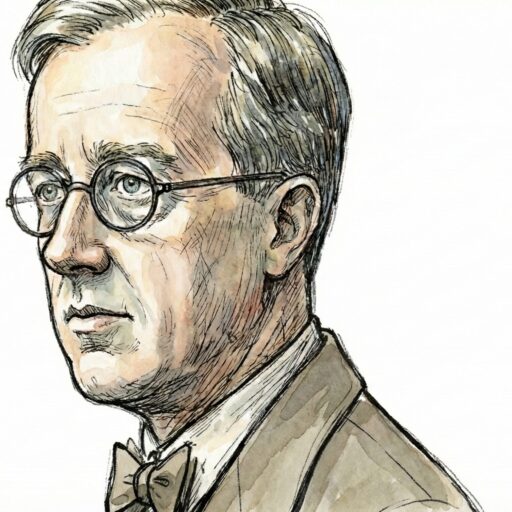
In 1991, I was a fourteen-year-old trombone player sitting in the stalls of my local library, engrossed in Imogen Holst’s biography of her father. At the time, I was just beginning to realize the power of my instrument, but it was Gustav Holst’s music that truly spoke to me. For the first time, I was playing music that felt like it was written for the soul of the trombone, not just as an afterthought in the back of the orchestra.
As I read, I found more than just a composer; I found a mentor… a kindred spirit. Growing up with poor eyesight, shy, and quirky, I saw my own aspirational goals reflected in Holst’s life. He was a man who transformed physical limitations and a quiet, unassuming nature into a profound, expressive, and invigorated musical language. I was hooked.
Jupiter was my gateway, but it was the First and Second Military Suites that solidified my fascination with Holst’s music. I became captivated by the period of time exactly 100 years before my own life—a century where cross-cultural connections, Sanskrit philosophy, and folk traditions were being woven into the fabric of Western music. I wanted to understand how these disparate ways of thinking were expressed through his scores. It was in the library that I discovered The Cloud Messenger, The Hymn of Jesus, and Seven Bridges Partsongs. These were in heavy rotation on my Walkman, alongside Morrissey, The Beatles, and Heavy D.
By the time I reached college, the internet was a frontier of “Under Construction” banners and slow dial-up tones. Naturally, I went looking for online resources on Holst, expecting to find the same depth of information I had found in those library stalls years earlier.
I found nothing.
I did, however, find a website dedicated to Holst’s lifelong best friend, Ralph Vaughan Williams. I emailed the webmaster, asking why there wasn’t a similar space for Holst. The reply was a direct challenge that changed the course of my digital life:
“This is a website about Vaughan Williams. If you would like a website on Holst, I suggest you build one yourself.”
In February 1996, I took that advice. What began as a handful of hand-coded HTML pages has grown over three decades into The Gustav Holst Website — honestly a labor of love or geekdom which is for a community of researchers, performers, and listeners.
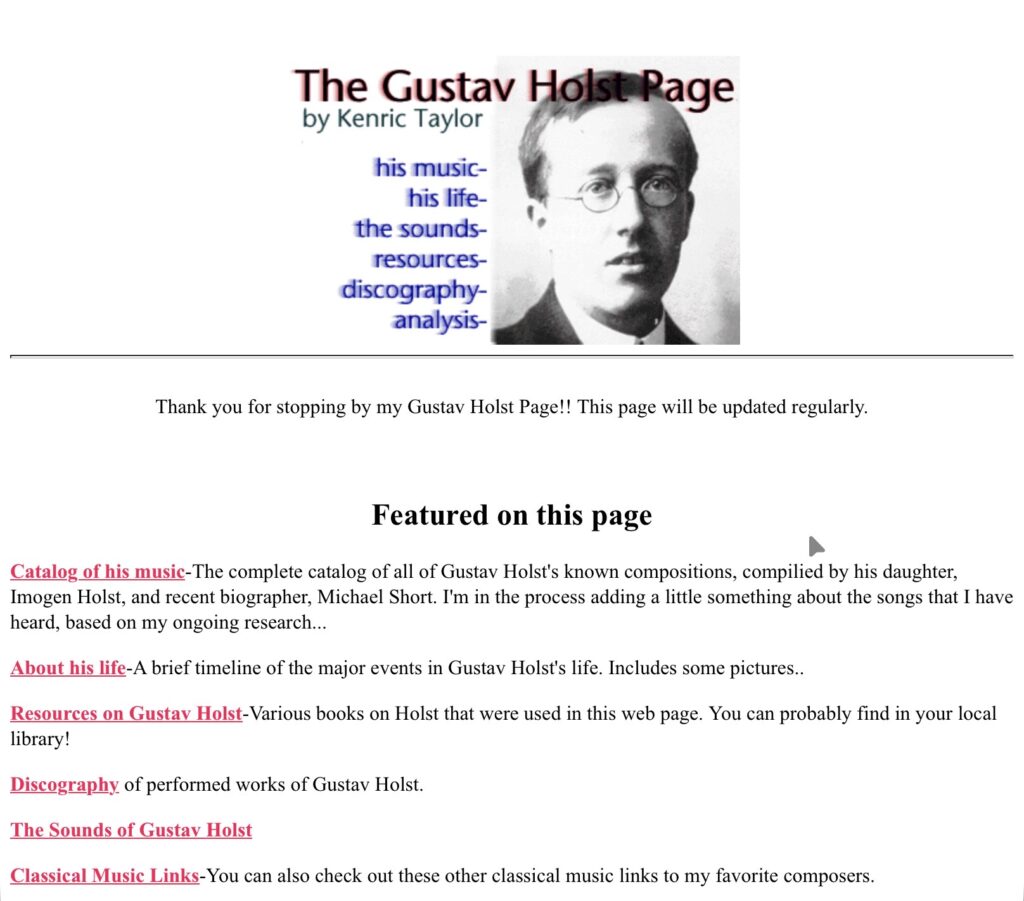
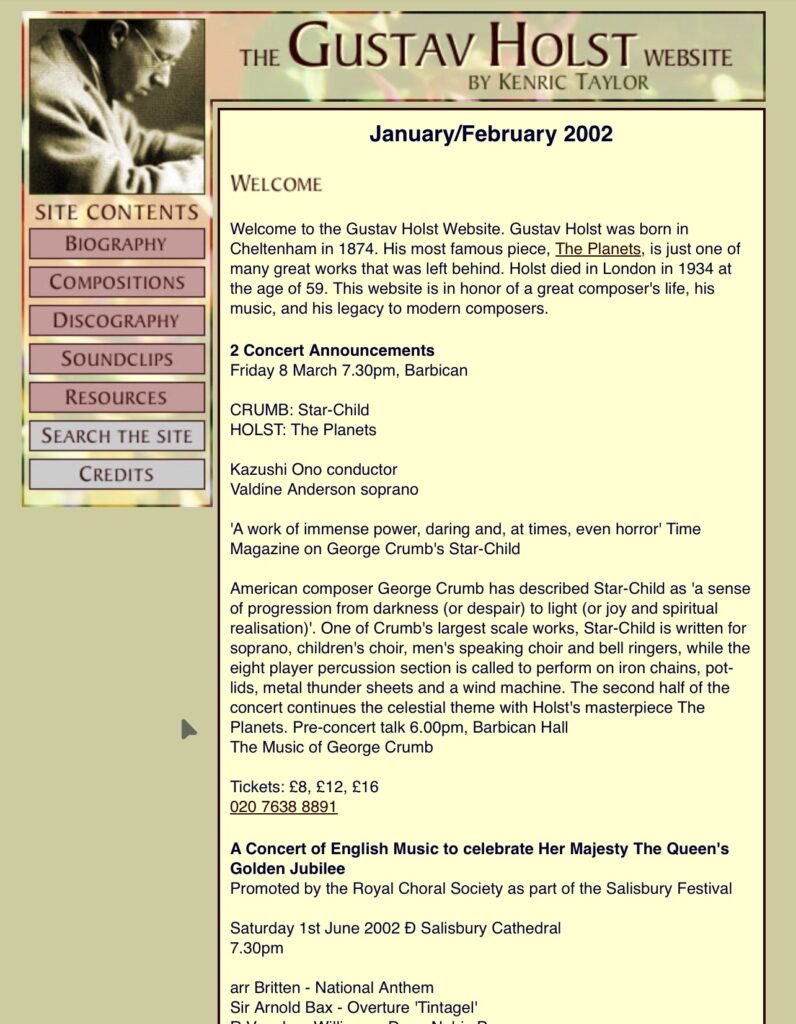
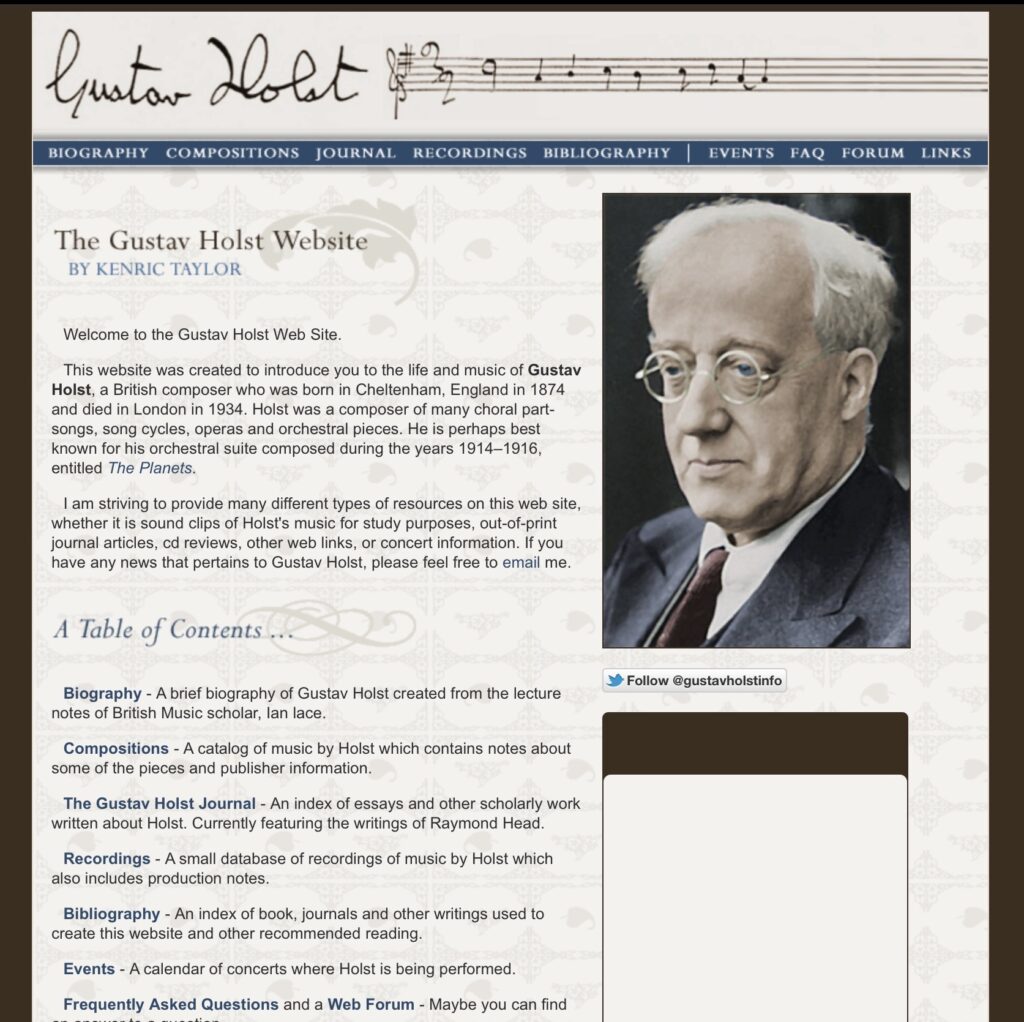
I can’t believe it’s been 30 years. I hope readers or random people who happen upon the site see this as a commitment to keep Holst’s music accessible to all. This archive remains a labor of love, dedicated to the “un-Planets” side of Holst: the mystic, the teacher, and the revolutionary composer who was always looking toward the future.
Thanks for visiting,
Kenric